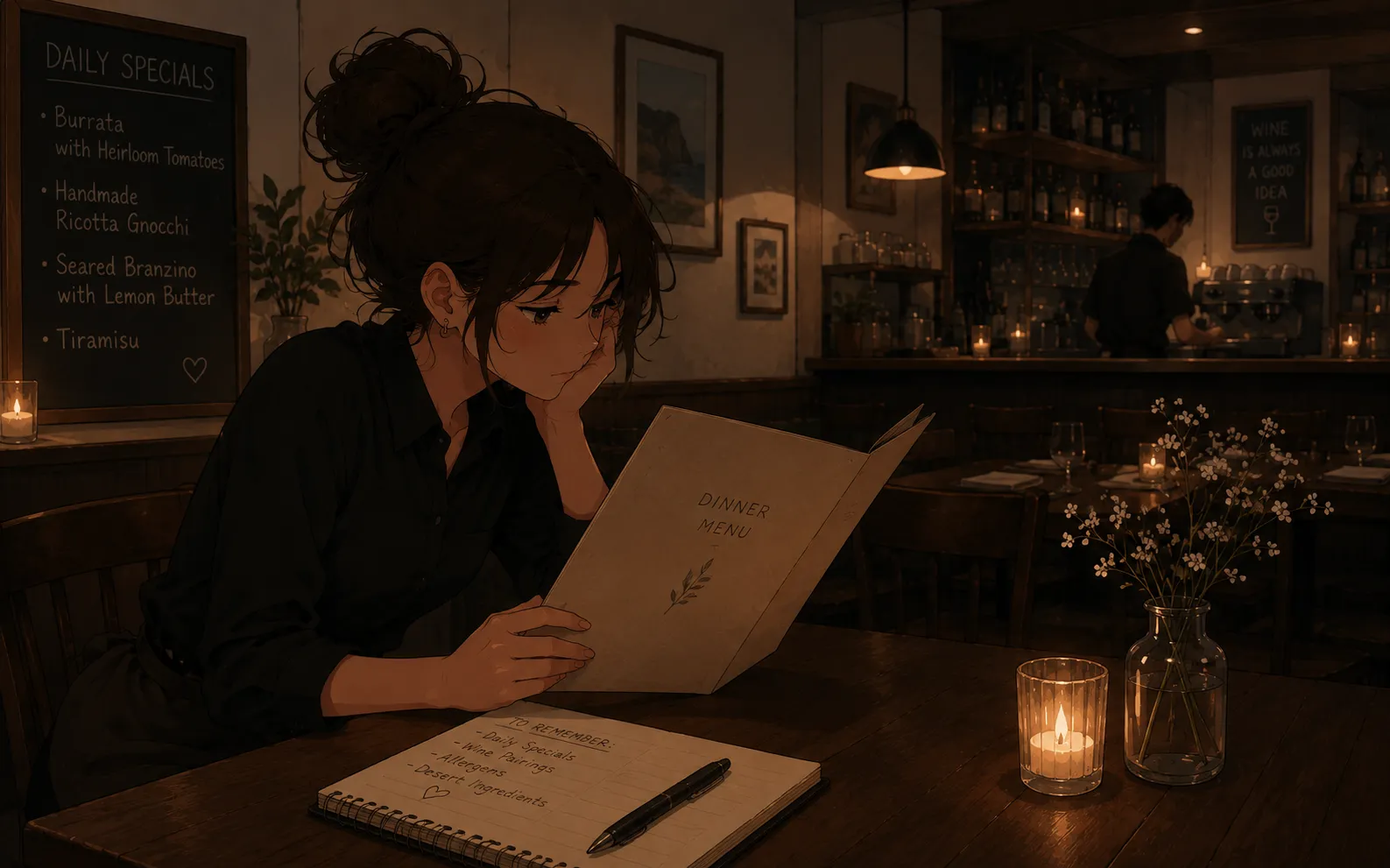
Daily specials are the hardest part of a menu to learn, not because they are complex, but because they live on a handwritten chalkboard that changes every shift. You cannot slowly memorize something that will be different tomorrow, so the move is to scan today’s board into a quiz fast. Photograph the chalkboard, let the AI read the scrawl into cards, fix the misreads, and drill the specials in the few minutes you have before service. A tool like MenuFlashcards does exactly this. It is in early access on iPhone.
This is the daily-specials cousin of turning a photo of any menu into flashcards, and the practical answer to daily specials that change every shift. The twist here is the medium: cursive chalk.
Why specials are worth drilling fast
The fixed menu you learn once; the specials you relearn every service, and they are exactly what guests ask about, because the server describing today’s special with confidence is the one who upsells it. Specials also carry the highest error risk, since they are new, often allergen-heavy, and not in the printed menu you studied. So the few minutes before service are best spent on the board, not the parts you already know.
What scanning a chalkboard actually does
The app uses text recognition to read the items off your photo and turn each special into a card: dish on the front, description and price on the back. Instead of copying four specials and their long descriptions by hand while you tie your apron, you photograph the board and have a quiz in a minute. The catch is the medium, so treat the scan as a fast first draft, not a finished deck.
Why cursive chalk is the hard case
Printed menus scan cleanly; a chef’s looping chalk does not. Faded chalk, glare off the slate, slanted writing, and dim pre-service lighting all push up the misread rate. This is not a flaw unique to one app, it is the limit of reading messy handwriting from a photo. The fix is on your side: a sharp, square, well-lit photo gives the recognition far more to work with than a quick angled snap.
Tips for a clean chalkboard scan
| Problem | Fix |
|---|---|
| Faded chalk | Get closer, add light, shoot straight on |
| Slate glare | Angle slightly to kill the reflection |
| Looping cursive | Expect misreads, confirm every card |
| Long special descriptions | Photograph one special at a time |
| Dim pre-service light | Turn lights up or use the flash |
The human check matters most for specials
Always scan the cards once and fix what the AI misread, and do it with extra care on specials, because they are new and often allergen-dense. A misread “no nuts” or a dropped “contains shellfish” on a special is worse than no card at all. Two minutes of checking turns a rough scan into a deck you can trust at the table.
Why a quiz beats staring at the board
Standing in front of the chalkboard rereading it is recognition practice at best. A review of the testing effect in the US National Library of Medicine shows that producing an answer from memory fixes it far better than rereading. So once the specials are cards, hide the answer, describe the dish and its allergens, then check. With four specials and five minutes, that quick quiz is the difference between describing them and fumbling.
Make the small effort stick
Even for a handful of specials, a quick spatial trick helps. A systematic review and meta-analysis of the method of loci found that tying items to places boosts recall over plain repetition, so pin each special to a spot, the soup to the door, the fish to the window, and they come back in order during service. And because specials repeat in rotation, spacing your practice across shifts means a special you scanned last week comes back faster the next time it appears.
A pre-shift routine for specials
- Photograph the specials board in good light, one special per shot if the writing is dense.
- Let the app read it into cards and fix every cursive misread.
- Check allergens on each special with extra care.
- Quiz from the dish name: description, allergens, price.
- Pin each special to a spot in your mental map, then run one round before service.
Bottom line
Daily specials on a cursive chalkboard are best handled by scanning, not staring: photograph the board, let the AI read it into cards, fix the misreads, and quiz the specials in your few pre-service minutes. The scan removes the copying; the quiz makes the specials stick. MenuFlashcards turns that handwritten board into a deck, even messy chalk, with a quick human check. It is in early access, so join the list and start with the free deck when it opens.